
الدليل الشامل
What Is Allowed and Not Allowed in Your Carry-On Bag? A Complete Guide for Travelers
2026-07-13T16:08:28.752576ZWhat Is Allowed and Not Allowed in Your Carry-On Bag? A Complete Guide for Travelers
Many travelers arrive at the airport security checkpoint only to have some of their belongings confiscated or be asked to reorganize their bags. In most cases, this happens because they are unfamiliar with the rules for carry-on luggage.
What Is a Carry-On Bag?
A carry-on bag, also known as a cabin bag, is the luggage you are allowed to bring with you into the aircraft cabin. It is stored either in the overhead compartment or underneath the seat in front of you.
Note: The permitted size and weight vary depending on the airline, so always check your airline's baggage policy before your trip.
Liquids in Your Carry-On Bag
One of the most common questions travelers ask is how much liquid they can bring on board.
Most airports allow liquids under the following conditions:
- Each container must not exceed 100 ml (3.4 oz).
- All liquid containers should be placed inside a clear, resealable plastic bag, where required.
- Security officers consider the maximum capacity of the container, not the amount of liquid remaining inside.
Liquids include:
- Perfume
- Shampoo
- Conditioner
- Creams
- Toothpaste
- Facial cleanser
- Gel
- Oils
- Liquid deodorant
Can You Bring a Power Bank?
Yes, but with certain restrictions.
Power banks must be carried in your carry-on bag only and are generally not allowed in checked baggage, as lithium batteries are subject to aviation safety regulations.
The permitted battery capacity may vary depending on the airline, so it's always best to check your airline's policy before flying.
Can You Bring a Laptop and Mobile Phone?
Yes.
The following electronic devices are generally allowed in your carry-on bag:
- Laptop
- Tablet
- Mobile phone
- Headphones
- Camera
At some airports, you may be asked to remove electronic devices from your bag during the security screening process.
Can You Bring Medication?
Yes, in most cases.
Personal medications are generally allowed in your carry-on bag, especially if you may need them during your flight.
Liquid medications exceeding 100 ml may be permitted for medical reasons, although you may be asked to provide a prescription or medical certificate depending on the airport or destination country's regulations.
Can You Bring Food?
It depends on the type of food.
Dry foods are generally allowed, such as:
- Biscuits
- Nuts
- Dates
- Chocolate
However, liquid or semi-liquid foods such as:
- Soup
- Yogurt
- Honey
- Sauces
may be subject to the same liquid restrictions.
Some countries also have additional restrictions on bringing food across their borders, so check your destination's customs regulations before traveling.
Items Not Allowed in Carry-On Luggage
Common prohibited items include:
- Knives
- Sharp objects
- Certain razor blades
- Any item considered dangerous under aviation security regulations
Some of these items may be allowed in checked baggage, depending on airline policies and local regulations.
What Should You Pack in Your Carry-On Bag?
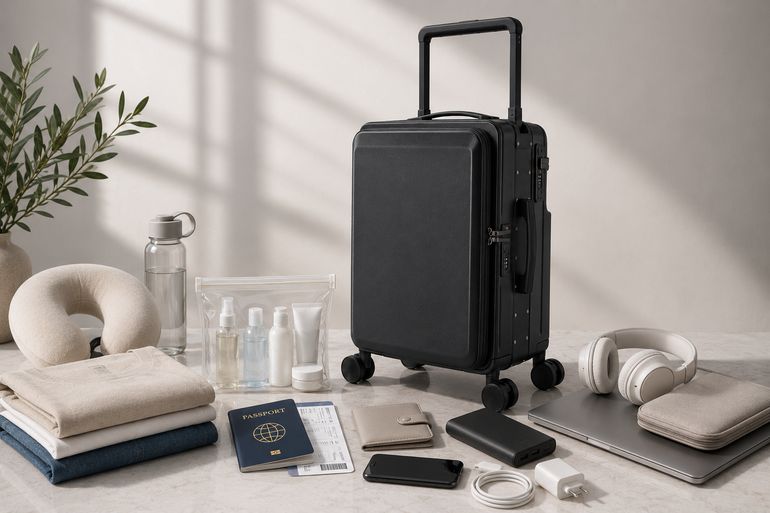
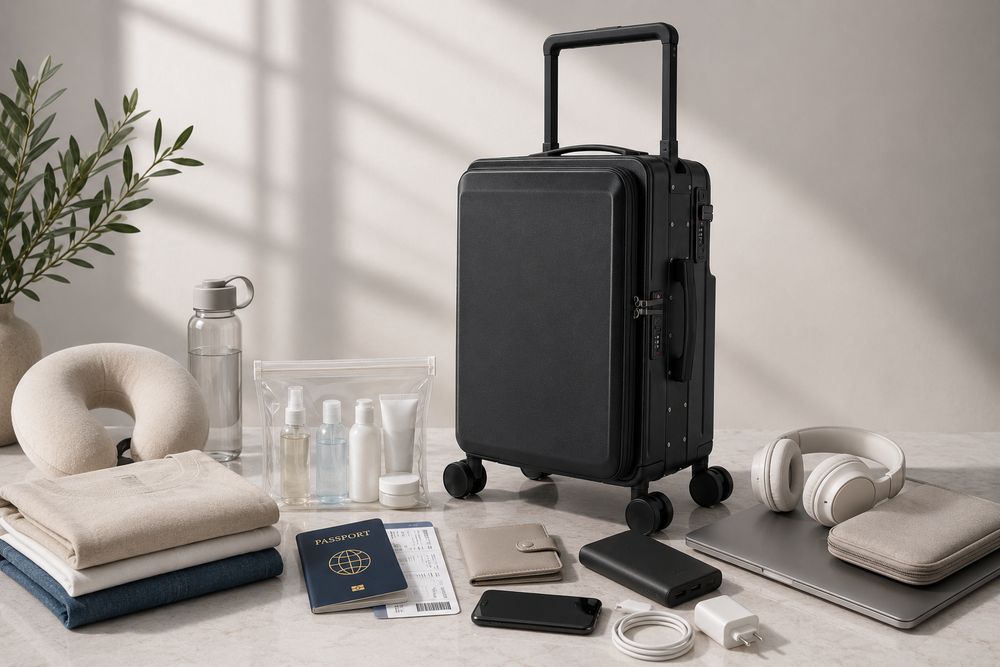
For a smoother journey, it's recommended to keep the following items in your carry-on:
- Passport or national ID
- Boarding pass
- Wallet
- Mobile phone and charger
- Power bank
- Laptop
- Earphones or headphones
- Essential medications
- A change of clothes
- Small personal care items
- An empty reusable water bottle to refill after passing security, where permitted
Tips Before Heading to the Airport
- Check your carry-on bag's size and weight.
- Review your airline's baggage policy.
- Keep liquids easily accessible for inspection.
- Charge your electronic devices before traveling, as security officers may ask you to switch them on.
- Keep all important and valuable items in your carry-on rather than your checked baggage.
Frequently Asked Questions
Can I bring perfume in my carry-on?
Yes, provided the bottle does not exceed 100 ml.
Can I bring shampoo?
Yes, as long as the container is 100 ml or less.
Can I bring makeup?
Most makeup products are allowed. However, liquid, cream, or gel cosmetics are subject to liquid restrictions.
Can I bring a power bank?
Yes. Power banks should generally be carried in your carry-on luggage and not in checked baggage.
Can I bring a laptop?
Yes. Laptops are among the most commonly carried electronic devices in cabin luggage.
Carry-On Bag Size and Weight Limits
Carry-on baggage allowances vary between airlines, but there is a standard size accepted by many carriers.
Common Carry-On Size
- 55 × 40 × 20 cm (or similar dimensions such as 55 × 35 × 25 cm, depending on the airline).
- Typical weight allowance ranges from 7 to 10 kg, depending on the airline and ticket type.
Personal Item
Most airlines also allow one additional personal item, such as:
- A handbag
- A laptop bag
- A small backpack
The personal item should be small enough to fit underneath the seat in front of you.
Examples of Airline Carry-On Policies
Airline
Carry-On Allowance
Saudia
Up to 56 × 45 × 25 cm, typically up to 7 kg on many fare types. Always verify your ticket details.
Flynas
Allowance varies by fare type, but many tickets include one carry-on bag up to 7 kg.
flyadeal
Allowance depends on the fare purchased, and cabin baggage may require an additional fee on some ticket types.
Important: Never rely solely on the standard dimensions. Carry-on size, weight limits, and baggage allowances differ between airlines and ticket classes, so always review your airline's official baggage policy before traveling.
Conclusion
Understanding what is allowed and prohibited in your carry-on bag can save you time, prevent delays at airport security, and help you avoid having items confiscated.
Since regulations may vary between airlines, airports, and destination countries, always check the latest baggage rules before your trip.
If you're planning your next journey, choosing a well-organized and durable carry-on suitcase can make traveling much easier by keeping your essentials secure and easily accessible throughout your trip.