
Travel tips and product care
Travel Luggage Protection: Plastic Wrapping vs. Reusable Luggage Covers
2026-07-13T21:50:13.383118ZTravel Luggage Protection: Plastic Wrapping vs. Reusable Luggage Covers
Before heading to the airport, many travelers find themselves choosing between wrapping their suitcase in plastic at the airport or using a reusable luggage cover. Both options are designed to protect your luggage, but each has its own advantages and best use cases.
Why Should You Protect Your Luggage?
During travel, suitcases go through a lot, including:
- Being dragged across different surfaces.
- Moving along baggage conveyor belts.
- Being stacked with other luggage.
- Friction during loading and unloading.
- Exposure to dust and dirt during transit.
All of these factors can lead to scratches, dirt, or minor cosmetic damage, especially if your suitcase is new.
What Is Airport Luggage Wrapping?
Airport luggage wrapping involves covering your suitcase with multiple layers of stretch plastic film. This service is available at many airports worldwide for an additional fee.
Its main benefits include:
- Reducing surface scratches.
- Protecting the suitcase from dirt and light moisture.
- Helping keep the suitcase closed if the zipper is damaged.
- Making any signs of tampering more noticeable.
What Is a Luggage Cover?
A luggage cover is a protective sleeve, usually made from polyester and spandex, that fits over your suitcase before you travel.
Its advantages include:
- Reusable for multiple trips.
- Easy to install and remove.
- Protects against scratches and dirt.
- Helps maintain the appearance of your suitcase.
- Available in a wide range of colors and designs.
- Makes it easier to identify your luggage on the baggage carousel.
Plastic Wrapping vs. Reusable Luggage Cover
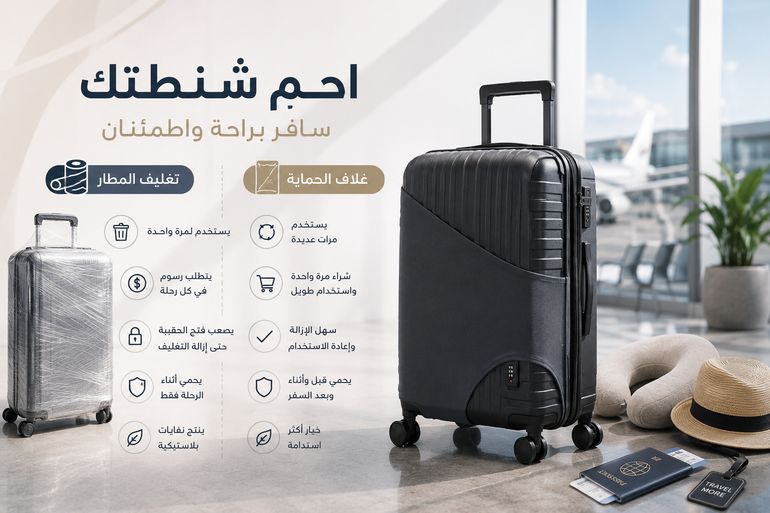
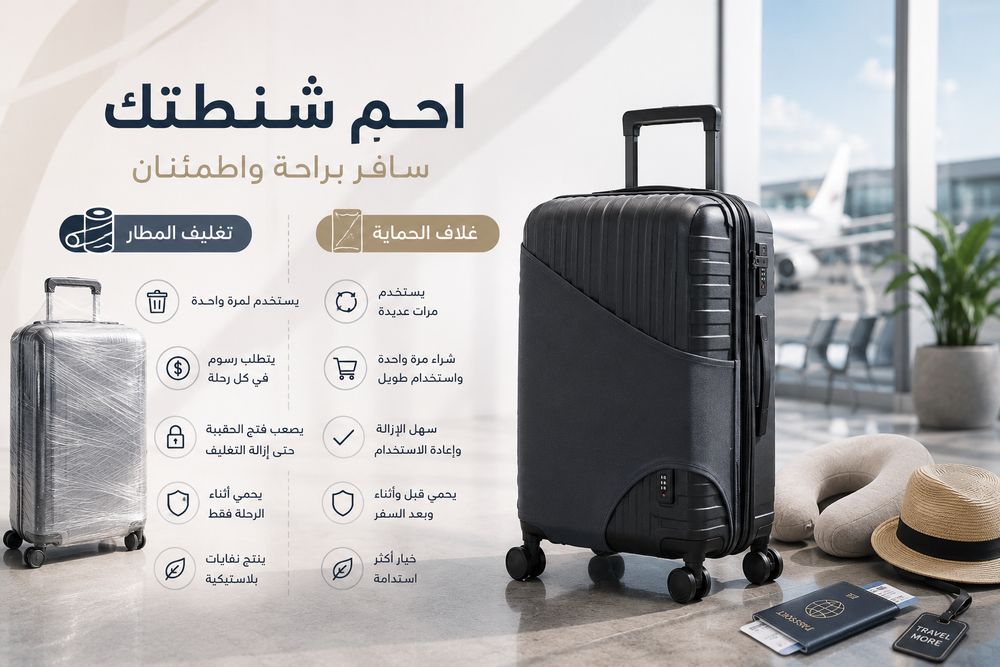
Airport Plastic Wrapping | Reusable Luggage Cover |
|---|---|
Single-use | Reusable multiple times |
Requires payment for every trip | One-time purchase |
Must be removed to access the suitcase | Easy to remove and reinstall |
Protects mainly during the flight | Protects before, during, and after travel |
Produces plastic waste | A more sustainable option |
Can a Luggage Cover Prevent Theft?
No luggage cover or wrapping method can completely prevent theft.
However, it can make unauthorized access more difficult and make any signs of tampering easier to notice.
For additional security, it's recommended to use:
- A TSA-approved luggage lock.
- A luggage ID tag.
- Carry valuable items in your carry-on bag.
When Should You Use a Luggage Cover?
A luggage cover is a great choice if you:
- Travel frequently throughout the year.
- Want to protect a new suitcase.
- Want to identify your luggage quickly at baggage claim.
- Want to reduce scratches and dirt.
- Prefer a cost-effective alternative to airport wrapping.
Can a Luggage Cover Replace Airport Wrapping?
For many trips, a luggage cover provides sufficient protection against scratches and dirt.
However, it may not completely replace airport plastic wrapping in situations where extra protection is preferred or when travelers choose to use the airport wrapping service for added peace of mind.
The best option depends on your destination, travel frequency, and personal preference.
Tips for Protecting Your Suitcase
- Choose a luggage cover that matches your suitcase size.
- Attach a luggage tag with your contact information.
- Make sure all zippers are securely closed before traveling.
- Use a TSA-approved lock when appropriate.
- Clean your suitcase after every trip.
- Store it in a dry place away from direct sunlight.
Types of Luggage Covers
Luggage covers are available in several materials, each offering different levels of protection and convenience.
1. Clear PVC Luggage Cover
A transparent or semi-transparent protective cover made from durable PVC, allowing your suitcase's original design and color to remain visible.
Advantages
- Protects against dust and dirt.
- Water-resistant against light rain and splashes.
- Preserves the appearance of the suitcase.
- Easy to wipe clean.
- Ideal for protecting new luggage.
May Not Be Ideal If
- You want a highly flexible cover.
- You prefer a fabric cover that stretches over the suitcase.
2. Fabric Luggage Cover (Polyester + Spandex)
This is the most popular type among travelers thanks to its flexibility and ease of use.
Advantages
- Stretchable for a snug fit.
- Protects against scratches and friction.
- Washable and reusable.
- Available in many colors and patterns.
- Makes luggage easy to recognize on the baggage carousel.
May Not Be Ideal If
- You want the suitcase's original color to remain fully visible.
- You need maximum protection from heavy rain, as most fabric covers are not fully waterproof.
Frequently Asked Questions
Are luggage covers allowed on flights?
Yes. Luggage covers can be used on checked baggage and, if appropriately sized, on some carry-on suitcases.
Can luggage covers be removed easily?
Yes. Most luggage covers include zippers, buckles, or hook-and-loop fasteners, allowing them to be installed or removed in just a few minutes.
Do luggage covers protect against scratches?
Yes. They help reduce scratches, scuffs, and dirt that suitcases may experience during travel.
Do I still need airport plastic wrapping if I use a luggage cover?
It depends on your travel needs. For many travelers, a reusable luggage cover provides enough protection to keep the suitcase in excellent condition, while others may still choose airport plastic wrapping for certain trips.
Conclusion
If you travel frequently, a reusable luggage cover is a practical investment that helps protect your suitcase from scratches and dirt while making it easier to identify at baggage claim. Airport plastic wrapping remains a suitable option for travelers who prefer additional one-time protection before their flight.